


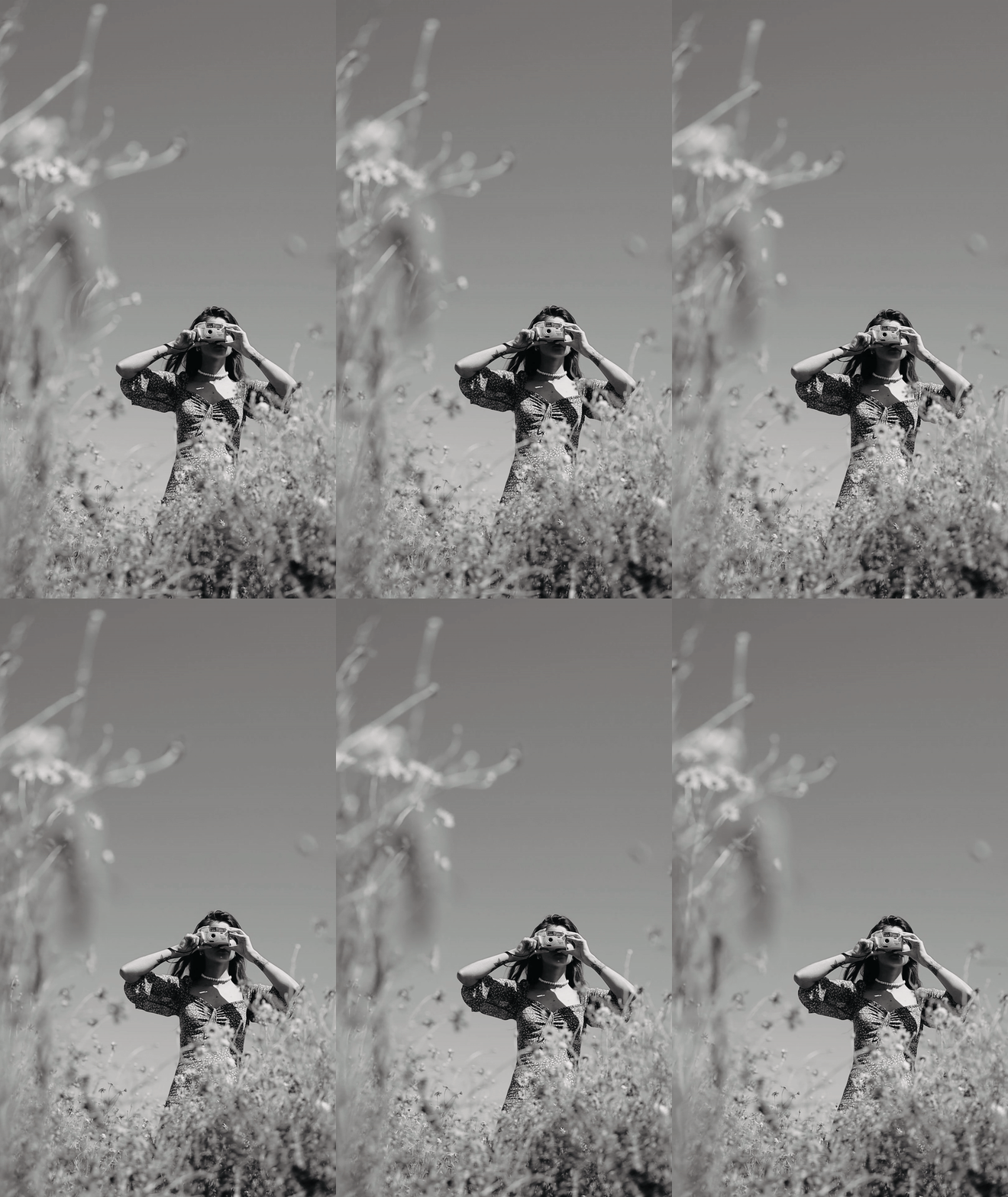

Outdoor weddings are breathtaking when they work. Open sky, natural light, fresh air, a backdrop no venue architect could design. There’s a reason so many couples dream of getting married outside — and a reason so many of those same couples feel quietly terrified of what could go wrong.
The truth is, outdoor weddings aren’t harder to pull off than indoor ones. They’re just different. The variables are different, the logistics are different, and the planning priorities are different. Once you understand what those are and get ahead of them, an outdoor wedding can be the most naturally beautiful and relaxed day imaginable.
This guide covers everything: weather contingencies, permits, sound, lighting, catering logistics, bug control, guest comfort, and how to make sure your photography and video coverage looks as stunning as the setting you’ve chosen.
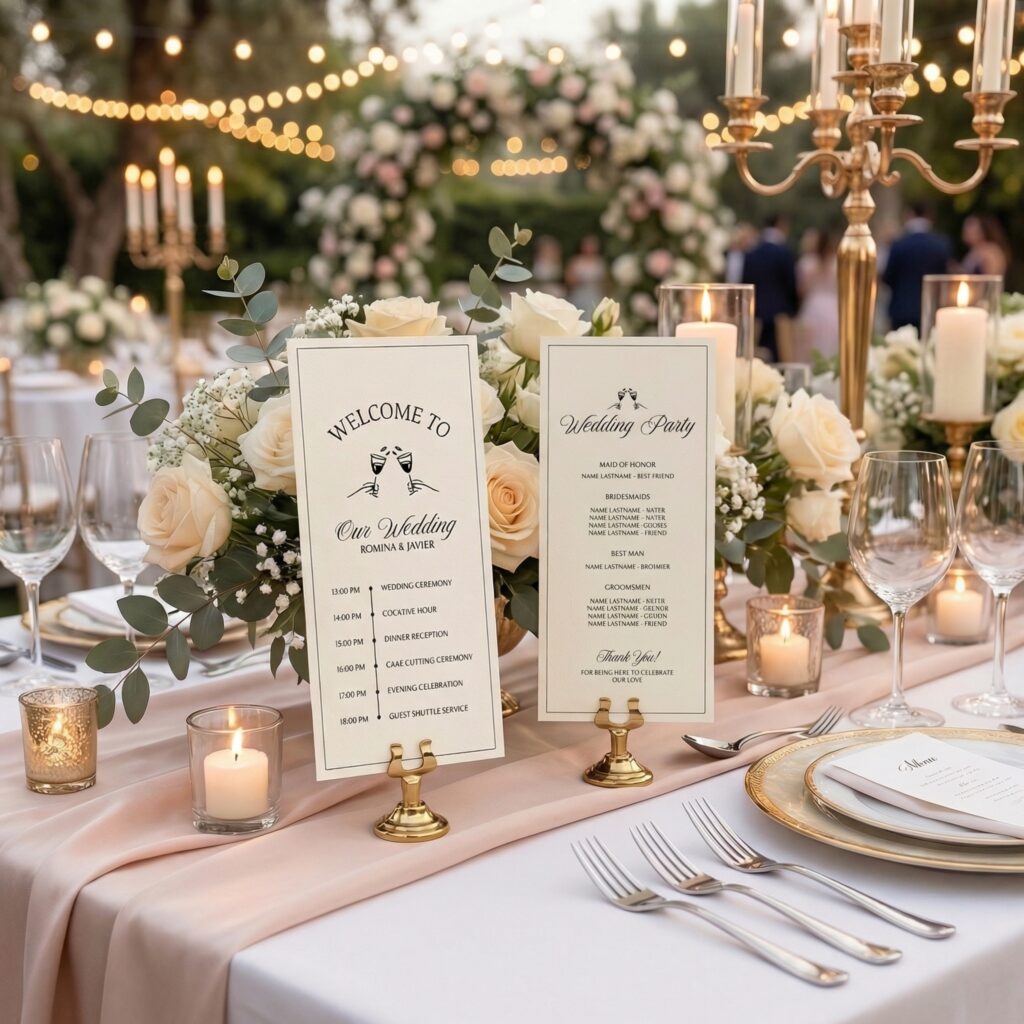
Start With the Right Venue — or the Right Property
The first decision in outdoor wedding planning isn’t the flowers or the tent. It’s where, exactly, you’re doing this — and understanding what that location does and doesn’t provide.
Dedicated Outdoor Wedding Venues
Many wedding venues offer outdoor ceremony or reception spaces as part of their package. These are the easiest starting point because the infrastructure is already there: power hookups, restrooms, parking, possibly a backup indoor space, and staff who have managed outdoor events in that specific location before. They’ve seen the afternoon wind that kicks up from the west. They know which months the gnats are unbearable. They’ve handled a surprise downpour on a Saturday in June.
If you’re choosing a dedicated venue with an outdoor component, ask specifically:
- What is the weather backup plan, and is it included in the rental or an additional cost?
- Is there access to power for catering, sound, and lighting?
- Where are the restrooms, and how far are they from the ceremony and reception spaces?
- What time does the outdoor space become available for vendor setup?
- Are there any noise ordinances or sound restrictions, and what time does music need to stop?
Private Properties — Backyard and Estate Weddings
A backyard or private estate wedding offers something no venue can: genuine personal meaning. It’s your parents’ property, your grandparents’ land, a place that already has history with your family. That emotional layer can make the day feel entirely different.
But a private property wedding also means you’re building everything from scratch. Power, restrooms, parking, catering infrastructure, tenting, sound — none of it is there waiting for you. You’re essentially creating a temporary event venue in someone’s backyard, and that requires a level of logistical coordination that surprises most couples.
If you’re considering a private property wedding, budget for: a wedding planner or day-of coordinator with outdoor event experience, portable restroom rentals (nicer than you’d think — “luxury restroom trailers” are a real thing and worth the upgrade), a generator or power assessment, tent rental if there’s any chance of rain, and parking logistics for your guest count.

The Weather Plan Is Not Optional
This is the thing couples most want to avoid thinking about and the thing that matters most. You need a weather backup plan before you book anything else. Not as an afterthought — as a foundational part of the event structure.
What a Real Backup Plan Looks Like
A backup plan isn’t “we’ll figure it out if it rains.” A backup plan is a specific, fully arranged alternative that can be activated the morning of your wedding without a single phone call to make.
That means one of the following:
A tent. A properly installed event tent with sides that can be dropped is the most flexible backup for outdoor weddings. It keeps you outside and in your original space, it photographs beautifully, it protects guests from both rain and sun, and it keeps the aesthetic intact. The downside is cost — a large event tent is a meaningful budget line — and the fact that a tent needs to be installed before your wedding day, not after the forecast changes.
An indoor secondary space. Some outdoor venues have an adjacent barn, ballroom, or covered pavilion that can absorb the event if the weather turns. If your venue has this, confirm in writing exactly what flipping to that space looks like, who makes the call, and at what point in the day the decision gets made.
Event insurance. Weather-related wedding insurance won’t stop the rain, but it can protect your financial investment if weather forces a significant change or a postponement. Worth looking into, especially for peak storm-season weddings.
When to Make the Call
Decide in advance who makes the weather call and when. The worst-case scenario is everyone waiting until 8 AM on wedding day to decide whether to move the ceremony inside — by which point caterers are already setting up, florists have delivered, and your photographer has scouted a space that no longer exists. Set a decision time: typically 48–72 hours out, based on the forecast, is the window where you can still make changes without chaos.
Permits and Local Regulations
This one gets skipped constantly and causes real problems.
If you’re getting married on a private property, check local ordinances on event size, noise, parking, and temporary structures. Many municipalities require permits for gatherings above a certain guest count, for tents above a certain size, and for amplified music after certain hours. These rules vary dramatically by city, county, and state.
If you’re getting married in a public outdoor space — a park, a beach, a forest preserve, a state or national park — you almost certainly need a permit, and those permits often have guest count limits, restrictions on décor, restrictions on amplified sound, and specific vendor rules. Apply early. Popular parks and public venues in states like Colorado, Washington, and Tennessee can have permit waitlists that run months out.
Questions to ask when you’re researching permits:
- Does this location require a special event permit?
- Is there a guest count threshold that triggers the permit requirement?
- Are there noise ordinances, and what time does amplified music need to stop?
- Are open flames (candles, fire features) permitted?
- Is alcohol permitted, and does that require a separate license?
- Are there restrictions on staking (for tents or floral arches)?
Power, Sound, and Lighting
These three things are deeply connected outdoors, and they’re all more complicated than they are inside a venue with built-in infrastructure.
Power
Most outdoor spaces either have no power access or have access that’s insufficient for a full wedding setup. Your caterers need power. Your DJ needs power. Your lighting vendor needs power. If any of those vendors are running simultaneously — which they will be — you need to understand the load requirements and whether the available power supports them.
For venues with limited power, a generator is often the answer. Your DJ or lighting vendor can usually advise on generator sizing. If you’re renting a generator, make sure it’s placed far enough from the reception area that the noise doesn’t bleed into the ambient sound — this is a more common mistake than you’d think and something your videographer will notice immediately when they’re pulling audio.
Sound
Sound outdoors behaves completely differently than sound indoors. Indoors, walls contain and reflect sound. Outdoors, sound dissipates into open air, which means your DJ or band needs a sound system scaled for the space — and that’s typically a larger, more powerful system than an equivalent indoor setup would require.
Wind is also a factor. Wind noise can interfere with microphones, which matters during the ceremony (your officiant, your vows) and during toasts. A professional DJ with outdoor event experience will know how to position and manage microphones to minimize wind interference. This is worth asking about specifically when you’re booking.
For your videography team, outdoor audio capture requires additional care — particularly during the ceremony. Your videographer will typically place a small wireless lavalier microphone on the officiant or groom to capture the vows cleanly. In an outdoor setting with ambient noise and wind, that microphone placement becomes even more critical. Make sure your video team knows it’s an outdoor ceremony well in advance so they can plan accordingly.
Lighting
Natural light is the greatest asset of an outdoor wedding — and it disappears at sunset.
If any part of your reception runs after dark (which it almost certainly will), you need artificial lighting, full stop. String lights are the classic choice and photograph beautifully. Edison bulbs on market light strands create a warm, intimate glow that works in almost any outdoor setting. Uplighting on trees, tent poles, or architectural features adds dimension and color.
What doesn’t work outdoors at night: relying on venue spotlights or venue-provided ambient lighting without seeing it first. Ask your venue what lighting is included, and if the answer is “standard outdoor lighting,” ask to see a photo of what that actually looks like at 9 PM. If the answer is effectively nothing, build a lighting plan into your budget.
For photography, great outdoor lighting at night requires either: sufficient ambient light from your string lights and décor, off-camera flash used skillfully by your photographer, or a combination of both. Discuss this with your photographer well in advance. A good photographer will ask about your lighting situation and plan accordingly — a great one will have specific suggestions.
Guest Comfort Is a Logistics Problem, Not Just a Nice-to-Have
Outdoor weddings are beautiful. They can also be genuinely uncomfortable if you don’t think through the guest experience, and an uncomfortable guest is a distracted guest who isn’t fully present for your day.
Heat and Sun
If your ceremony or reception is partially or fully in direct sun, especially in summer months, guests need shade, water, and the ability to cool down. Practical solutions: parasols or fans set out at the ceremony seating, a shaded cocktail area, chilled water stations during cocktail hour, and a tent or pavilion for the reception if temperatures are expected to be high.
A personal note on this: outdoor ceremonies in direct July or August sun, even in beautiful locations, can become genuinely taxing for guests — particularly elderly family members. Consider your ceremony start time with this in mind. A 5 or 6 PM ceremony in summer is significantly more comfortable than a 2 PM one, and it also lines up better with golden-hour light for your photos.
Cold and Wind
Evening outdoor events in shoulder seasons — spring and fall — can shift temperature quickly after sunset. If your venue is beautiful in October but your reception runs until 10 PM, guests will be cold by hour two of dancing. Solutions: provide blankets or wraps at a self-serve station, use patio heaters strategically around the perimeter of the tent or dance floor, and give guests a heads-up in your invitations that the evening will be outdoors so they can dress accordingly.
Bugs
This one sounds minor and is not. Mosquitoes, gnats, and flies at an outdoor evening reception are a real guest experience issue, especially near water features or wooded areas in states like Tennessee, Indiana, Michigan, or the Pacific Northwest. A few practical solutions: citronella candles placed at tables (confirm these are permitted at your venue), mosquito repellent wipes or sprays made available at a small station near the entrance, and if the problem is significant, professional venue treatment a few days before the event.
Restrooms
If your venue’s restroom situation involves a walk across a field or through a building that’s a significant distance from the reception space, guests will opt not to go — and that creates its own problems. Portable luxury restroom trailers positioned close to the reception and reception adjacent are a legitimate option and dramatically better than the standard port-a-potty image most people have. Worth the investment for a large guest count.
Outdoor Wedding Photography and Videography: What to Know
Your outdoor setting is one of the biggest gifts you can give your photo and video team — natural light, texture, space, and depth that no studio can replicate. But outdoor coverage also has specific considerations worth discussing with your team before the day.
Scout the Location
If possible, ask your photographer and videographer to visit the venue with you before the wedding, or at minimum share detailed photos and a site map. The way light moves through an outdoor space across the day changes dramatically. Where you want to take portraits at 3 PM might be in harsh overhead shadow at that time but gorgeous at 5:30 PM. An experienced team will factor this into your timeline recommendations.
The Golden Hour Advantage
Outdoor weddings have a significant golden hour advantage over indoor ones. If your ceremony or portrait timing aligns with the 20–40 minutes after sunset, the light in those images is something no indoor venue can approximate. Work with your photographer to structure your timeline so that at least a short portrait session — even just 15–20 minutes — falls in that window. It’s worth adjusting the reception schedule around.
Wind and Dress Movement
Wind makes outdoor wedding photos dynamic and cinematic — a dress caught in motion, a veil floating. It also, occasionally, causes logistical headaches. If your venue is consistently windy (coastal locations, mountain venues, open plains), talk to your photographer in advance. They’ll have strategies for working with the wind rather than fighting it.
Rain as an Asset
A common fear, but worth reframing: overcast skies produce some of the most gorgeous wedding photos of the year. The soft, diffused light of a lightly cloudy day is flattering, forgiving, and beautiful. A light rain can add drama and intimacy that sunny-day weddings rarely have. If you have a tent or covered backup space, your photography team can often use rain to their advantage. Keep an open mind.
The Outdoor Wedding Vendor Checklist
Before you finalize your outdoor wedding plan, run through this list:
- Weather backup plan confirmed and arranged (tent, indoor space, or both)
- Permits researched and applied for (local ordinances, public land requirements)
- Power assessment completed (generator sourced if needed)
- Sound system scaled for outdoor use confirmed with DJ or band
- Ceremony microphone plan discussed with videographer
- Lighting plan for after-dark reception confirmed
- Guest shade or heat mitigation in place for daytime events
- Heating or blankets arranged for cool-evening receptions
- Bug mitigation plan in place for affected regions or seasons
- Restroom access confirmed (or portable restrooms rented)
- Parking logistics confirmed for guest count
- Photo and video team briefed on outdoor location and lighting conditions
- Golden hour window built into portrait timeline
A Note on Outdoor Weddings Across the States We Serve
Every outdoor wedding is shaped by its landscape, and we’ve had the privilege of working in some genuinely stunning ones. Mountain venues in Utah and Colorado bring incredible backdrops but afternoon thunderstorms that arrive fast and leave fast — weather planning is non-negotiable there. Tennessee and the Carolinas offer lush, green settings but humid summers and active bug seasons. The Pacific Northwest — Washington and Oregon — delivers dramatic scenery and famously soft, diffused light, even on overcast days. Michigan and Indiana have beautiful outdoor venues but unpredictable spring and fall weather that rewards having a solid tent plan.
Whatever your location, the principles are the same: plan for the conditions specific to your setting, get the logistics right, and let the setting do what only the outdoors can do.
Final Thoughts
An outdoor wedding done right is something genuinely hard to match. The setting, the light, the feeling of the open air — it creates a backdrop that photographs and films in a way that no interior space fully replicates.
Getting it right means planning for the things that are different about being outside: the weather, the power, the sound, the light after dark, and the guest experience across a full day spent outdoors. None of those things are obstacles. They’re just logistics — and logistics, handled early, have a way of becoming invisible on the actual day.
If you’re planning an outdoor wedding and want to talk through how your timeline, portrait setup, or coverage plan should account for your specific venue and setting, we’d love to connect. We’ve covered outdoor weddings across twelve states and bring location-specific experience to every day we shoot.
Promani Weddings offers wedding photography, videography, DJ services, and content creation across Utah, Colorado, Tennessee, Michigan, Virginia, Washington, Oregon, Illinois, Indiana, North Carolina, Massachusetts, and Idaho. View our packages or reach out to start planning your day.


Free
Inspiration
recently on the journal
Previous Post:


