
How to Build a Wedding Day Timeline That Actually Works
Filed in Featured, Wedding Tips / March 20, 2026 /




Your wedding day will be one of the most photographed, most anticipated, most emotionally charged days of your life — and it will go by faster than you ever thought possible. One of the single best things you can do to protect that day is build a timeline that actually works.
Not a timeline that looks good on paper. One that accounts for real life: the bridesmaid who needs an extra fifteen minutes, the venue that’s farther from the hotel than Google Maps suggests, and the golden-hour window your photographer has been quietly planning around for weeks.
This guide will walk you through how to build a wedding day timeline from scratch — what to include, how much time to realistically give each part of your day, common mistakes couples make, and two sample timelines you can adapt right now.
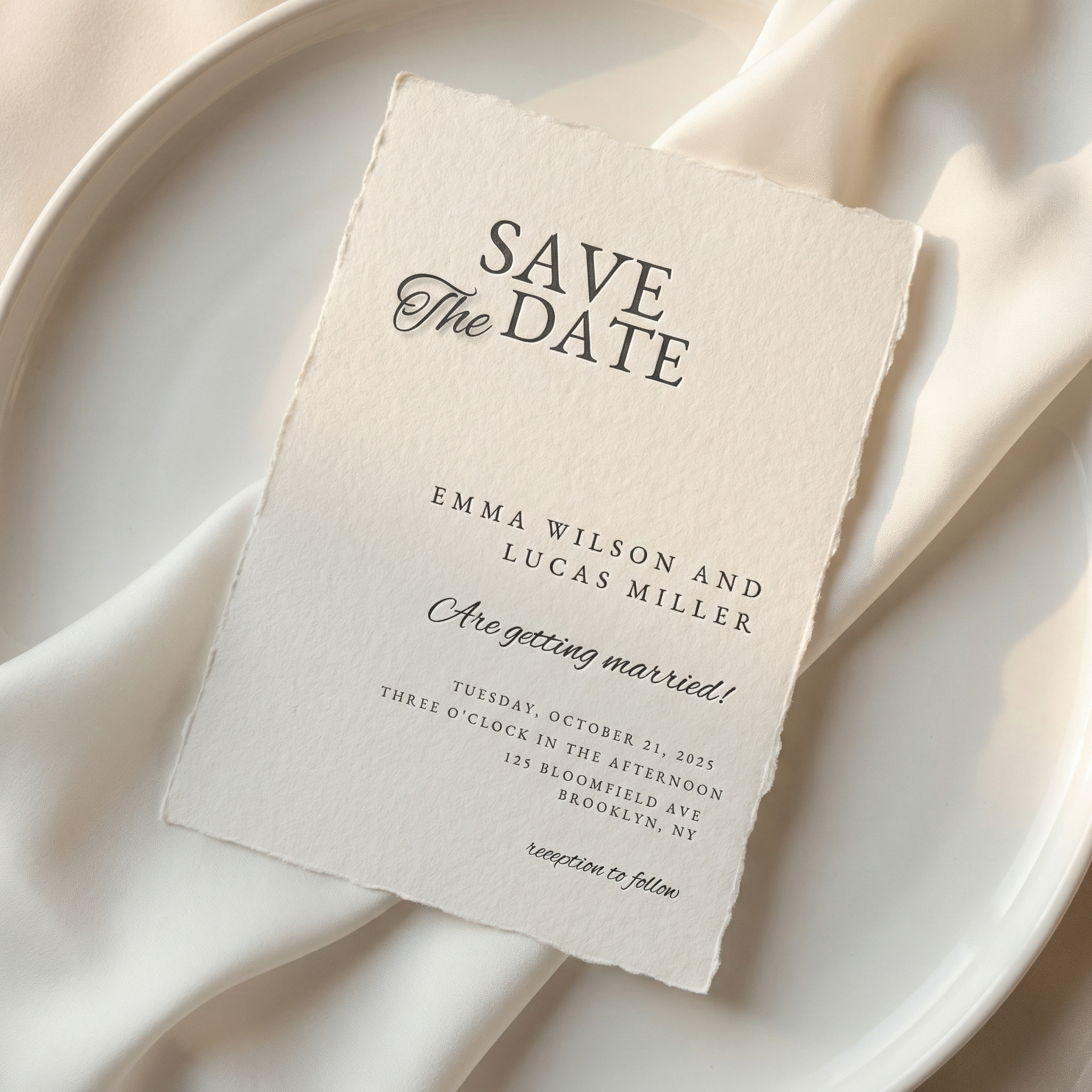
Before we dive in, if you enjoyed the wedding invites/menus/save the dates, check out our etsy store where we sell them 🙂

Why Your Wedding Day Timeline Matters More Than You Think
Most couples underestimate how tightly connected every part of the day is. When one thing runs late, everything after it shifts. Hair and makeup goes long → getting-ready photos get rushed → first look starts late → formal portraits eat into cocktail hour → your guests wait → dinner is delayed → the reception feels compressed.
A well-built wedding day timeline isn’t about being rigid. It’s about giving yourself enough breathing room that when things run a few minutes behind (and something always does), you’re not scrambling to catch up for the rest of the evening.
Your photographer and videographer will also thank you. Light changes fast, especially around sunset. If your portrait session was supposed to happen at golden hour but runs 45 minutes late, you’ve lost the soft, warm glow that made you fall in love with their portfolio in the first place.
Start With the Anchors
Before you fill in the details, lock in the four major anchors of your day:
1. Ceremony time — This is usually your first fixed point, set by the venue or officiant.
2. Reception dinner time — Work backward from when guests expect to eat.
3. Sunset time — Check the exact sunset time for your wedding date and location. This determines your golden-hour portrait window.
4. Venue curfew or end time — When do vendors need to be out? When does the music stop?
Once you know these four times, everything else gets built around them.
How Long Does Each Part of the Day Actually Take?
This is where most couples go wrong — they underestimate almost every block. Here’s a precise breakdown of how photo and video coverage actually runs on a wedding day, based on how professional teams structure their time.
The single most important rule: photo and video coverage begins 3.5 hours before your ceremony. Everything in the pre-ceremony block needs to fit inside that window. If it doesn’t, something gets cut or rushed.
Detail Shots — 30 minutes
This is the first thing your photographer does when they arrive. Flat lays of the dress, shoes, rings, bouquet, invitation suite, and any other meaningful details. Brides sometimes ask if this block is really necessary. It is. These images set the visual story of your day — and they can only be captured before the chaos begins.
Getting Ready (Before the Dress) — 15 minutes
Candid moments of the final prep: bridesmaids finishing hair, the bride getting into her shoes, quieter in-between moments that tell the story of the morning.
Getting Ready (Into and After the Dress) — 15 minutes
The dress goes on. These are some of the most emotional images of the day — lacing up, zipping, the first moment the bride sees herself. Then a few clean portraits of the bride fully dressed before the bridal party joins.
All Girls Bridal Party Photos — 25 minutes
Bridesmaids with the bride: full group, smaller groups, and candid moments together. Done while everyone still looks fresh.
Guys: Getting Ready + Groomsmen Photos — 30 minutes
This block runs parallel in the groom’s suite. Getting dressed, finishing details, groomsmen portraits together. The guys typically need less setup time but still need the full 30 minutes to do it right.
First Look + Couples Portraits — 30 minutes
If you’re doing a first look (and we recommend it — more on that below), this 30-minute window is where the couple sees each other privately and gets their first round of portraits done. This is one of the most meaningful parts of the day, and it significantly reduces the pressure on post-ceremony portrait time.
Ceremony Prep — 30 minutes (non-negotiable)
A full 30 minutes before the ceremony is locked off for setup. This is not optional when you have photo and video coverage. Videographers need time to place microphones, test audio, position cameras, and run cable. Photographers need to walk the space, plan their angles, and be in position before guests arrive. Do not schedule anything in this window.
Family Formals — 30 minutes
Immediately after the ceremony, plan 30 minutes for family photos. How that time is split depends on two things: what matters most to you, and whether you did a first look.
- If you did a first look: 30 minutes for family photos, 10 minutes for a few additional couples portraits, 20 minutes for candid reception coverage.
- If no first look: You can split the 30 minutes as 15 minutes for full bridal party photos and 15 minutes for couples portraits — or 10 minutes for the full bridal party and 20 minutes for couples portraits, depending on your priorities.
The key is deciding in advance and communicating it to your photographer so the post-ceremony block moves efficiently.
Dinner — 1 hour

Plan for a full hour of dinner service. Rushing dinner puts guests in a bad mood and puts your DJ in an awkward position trying to hold the floor.
Open Dancing — 1.5 hours to 4 hours
The range here depends on your crowd, your music, and how much evening you have left. A great DJ will read the floor and keep energy moving, but give the dancing room to breathe — at least 1.5 hours of open floor time is the minimum for a reception that feels like a real celebration.
Two Sample Wedding Day Timelines
Both timelines below assume a first look is included and that photo and video coverage begins 3.5 hours before the ceremony. Hair and makeup should be fully wrapped — or down to the bride’s final touches — by the time coverage begins.
Sample Timeline: 4 PM Ceremony
| Time | Event |
|---|---|
| 12:30 PM | Photo + video coverage begins — detail shots (flat lays, dress, rings, florals, invitation suite) |
| 1:00 PM | Getting ready before the dress — candid moments, final preparations |
| 1:15 PM | Into the dress — getting ready after the dress, bride portraits |
| 1:30 PM | All girls bridal party photos |
| 1:55 PM | Guys: getting ready + groomsmen photos |
| 2:25 PM | First look + couples portraits |
| 2:55 PM | Bridal party photos, then touch-ups, transition |
| 3:30 PM | Ceremony prep begins — photo + video setup (non-negotiable) |
| 3:30 PM | Guests begin arriving |
| 4:00 PM | Ceremony begins |
| 4:30 PM | Ceremony ends — family formals begin |
| 5:00 PM | Additional couples portraits (10 min) |
| 5:10 PM | Candid cocktail hour coverage (20 min) |
| 5:30 PM | Guests move to reception |
| 5:35 PM | Grand entrance + first dance immediately |
| 5:50 PM | Dinner service begins |
| 6:50 PM | Dinner ends |
| 6:55 PM | Parent dances — kick off the dance floor |
| 7:10 PM | Open dancing |
| 11 PM | Last dance / send-off |
Sample Timeline: 6 PM Ceremony
| Time | Event |
|---|---|
| 2:30 PM | Photo + video coverage begins — detail shots |
| 3:00 PM | Getting ready before the dress |
| 3:15 PM | Into the dress — getting ready after, bride portraits |
| 3:30 PM | All girls bridal party photos |
| 3:55 PM | Guys: getting ready + groomsmen photos |
| 4:25 PM | First look + couples portraits |
| 4:55 PM | Finish Bridal party photos |
| 5:30 PM | Ceremony prep begins — photo + video setup (non-negotiable) |
| 5:30 PM | Guests begin arriving |
| 6:00 PM | Ceremony begins |
| 6:30 PM | Ceremony ends — family formals begin |
| 7:00 PM | Additional couples portraits (10 min) |
| 7:10 PM | Candid cocktail hour coverage (20 min) |
| 7:30 PM | Guests move to reception |
| 7:35 PM | Grand entrance + first dance immediately |
| 7:50 PM | Dinner service begins |
| 8:50 PM | Dinner ends |
| 8:55 PM | Parent dances — kick off the dance floor |
| 9:10 PM | Open dancing (45 min – 1.5 hours) |
| 10:40 PM | Last dance / send-off |
Tips for Couples Who Want Great Photos AND a Relaxed Day
Do your first dance immediately with the grand entrance. This is one of the best pieces of advice we give every couple, and here’s why: the moment you walk into that reception room, the energy is electric. The room is clean, the tables are set, the staff has stepped back, no one is at the bar, and every single guest has their eyes on you. That momentum carries straight into a first dance that feels alive and cinematic — and your photos will show it. Contrast that with doing your first dance after dinner, when guests are tired, chairs have been pushed out, staff is clearing plates, and half the room has wandered off. It’s not that it can’t be beautiful — it can — but the energy is fundamentally different. When couples ask us what we’d recommend, we always say: dance right when you walk in.
Let your parent dances kick off the dance floor — after dinner. Placing parent dances right after dinner serves two purposes. It gives the night a natural second wind after people have eaten, and it transitions the room beautifully from dinner into open dancing. Parent dances feel more intimate and heartfelt in that moment, and they do a great job of pulling people to the floor so that by the time open dancing starts, the floor is already moving.
Treat ceremony prep as a hard stop. Your photographer and videographer need that 30 minutes before the ceremony, no exceptions. Use the time for touch-ups, a quiet moment together, or gathering the wedding party — but don’t schedule anything that requires your creative team. They’re setting up so that the ceremony is covered perfectly from the first guest walking in to the last kiss.
Do your first look. If capturing beautiful, relaxed portraits is important to you, a first look is the single best way to create more time for them. It calms nerves, creates a private moment before the ceremony, and opens up the post-ceremony portrait block significantly. It doesn’t take away from the ceremony reveal — it actually tends to make couples feel more present and less overwhelmed when they walk down the aisle.
Give your photographer your family formals list before the wedding day. The post-ceremony family block moves fast. If your photographer has a list of every grouping in advance — and you’ve designated one family member as the person who knows everyone by name and can round people up — the whole 30 minutes becomes much smoother. Without a list, you lose 5–10 minutes just sorting out who goes in which photo.
Share the timeline with every vendor. Your photographer, videographer, DJ, caterer, and officiant should all have a final copy of the timeline at least two weeks before the wedding. When vendors are aligned, the day runs like a team effort. When they’re not, you spend your wedding day answering questions.
Working With Your Photographer and Videographer on the Timeline
Your wedding photographers and videographers are experts at this. A good creative team will review your venue, your ceremony time, your sunset window, and your family size — and help you build or refine your timeline before the day.
At Promani Weddings, timeline planning is part of how we serve our couples. We photograph and film weddings across Utah, Colorado, Tennessee, Michigan, Virginia, Washington, Oregon, Illinois, Indiana, North Carolina, Massachusetts, and Idaho — and every location, every season, and every venue has its own light, logistics, and quirks. Part of our job is making sure your timeline works for your specific day, not just a generic template.
If you’re still in the planning stages and want to talk through your timeline, we’d love to connect.
Final Thoughts
A great wedding day timeline is the difference between feeling present and feeling panicked. It doesn’t need to be minute-by-minute perfect — it needs to be realistic, well-communicated, and built with enough breathing room that the unexpected doesn’t derail everything.
Start with your four anchors. Build backward and forward from there. Give every block more time than you think it needs. Share it with every vendor. And then let the day unfold.
You’ve planned something beautiful. A smart timeline makes sure you actually get to enjoy it.
Promani Weddings offers wedding photography, videography, DJ services, and content creation across Utah, Colorado, Tennessee, Michigan, Virginia, Washington, Oregon, Illinois, Indiana, North Carolina, Massachusetts, and Idaho. View our packages or reach out to start planning your day.

Free
Inspiration
recently on the journal
Previous Post:


